Time for a few high-powered updates from your humble interlocutor:
OSRIC 3.0 CROWDFUNDING
The original retroclone! Rising from the ashes of the OGL debacle, Mythmere Games fires up a crowdfunding campaign to make sure Corpo-gaming can never fuck with us again. Based on Creative Commons, with the brand-new AELF license for adventure writers. The final age is upon us, the end of history, the eternal AD&D. As God and Gary intended!!!
Backerkit campaign is HERE. Get stoked and sign up now, scum!!!
FIGHT ON! #16
The premier old-school zine is back in force with a second new issue! This one has been out for a little while, and this time I contributed. My Terrible City Guards table is inside!
Go do your homework and support the old-school Gs who have been sticking their necks out to bring the rest of us Vintage Thrill-Power since you posers were in diapers playing Shadowdark.
Still kicking! I just ran 2 games this weekend. The online crew has some backup characters in the Level 1 Pipeline, they'll need them for what's coming up. They just boarded the Sea Ghost in U1. And my in-person group is about to go into outer space (so that'll be a bucket list gaming moment!!!).
I just wanted to point THIS out and say that everyone should click it, read it, love it, and believe it. Because I say so.
[UPDATE]
The conversation continues! Other OGs weigh in:
AD&D evangelist Zherbus had this HERE on his blog for a while, I just hadn't read it JB, terror of comment sections everywhere, posts his thoughts HERE forum legend Black Vulmea weighs in on his blog HERE
And EOTB follows up his original post with a helpful clarification: "No Roleplaying?!?"
Someone made this enormous 'connections map' of D&D blogs a while ago, with TRVE OLDSCHOOL bloggers in red and nuskool guys in green. For my sins, this page is in the teal section in between:
Click to enlarge. You are currently located just above dead center, west of Grognardia, north of the Land of Nod, south of Tenfootpole & Mazirian's Garden, slightly obscured by Trilemma. Not a bad place to be, really...
Anyway that's not precisely relevant, but I thought it was interesting. Welcome back to the series on workflow (See Part I). Let's see what else we can figure out huh?
*** Watch for Distractions ***
I can get distracted easily by cool ideas. Often they're not original to me but once I come across them, they get lodged in my mind and refuse to leave until I do something. This means developing them until I get enough on paper that I am no longer obsessing, which usually takes a few weeks.
Do any other folks deal with this, or is it just me? Is it ADHD or something? I don't know.
If only I could muster that kind of focus for what I actually wanted to work on! It's hard to get things done while constantly bouncing around on material that will never see play because I got distracted by a neat idea.
This is analogous to the musicians I know who play in a ton of different projects. How about instead of doing 5 fucking bands, you cut out the weakest ideas and do one band with all the best material? Maybe it will be tougher to instantly categorize, but isn't that better anyway?
This is also something we can lay at the feet of some OSR bloggers who made their reputations (and sometimes lucrative kickstarters) writing about their Extremely Distinctive Games. Nowadays, I suspect that's backwards for most people. A good D&D campaign should be big enough to fit almost anything - knights in shining armour & alcoholic gamblers, tomb robbing & cosmic adventures, deserts & glaciers, kingdom management & rat fights... you get the idea.
What I eventually found is that usually these 'weird ideas' are not so different as to be unworkable in one's regular game. What, you think a sci-fi game of power-armoured knights exploring the solar system would be awesome? (I have been thinking about one for a while) There's no reason you can't put a crashed spaceship in your D&D game - or a teleporter to another planet! They did it back in the day after all.
Don't obsess on these weirdo ideas at the expense of your regular game, and don't hold them back for some imagined future that may never come.
It does nobody any good to save cool ideas for later when game night is coming up this weekend! Put them in there. It doesn't have to be the focus. Start small. If the wild idea obsessing you is really that good, you will have more in the tank for later and if it isn't, at least you added some spice to your regular game instead of going in circles.
*** Reduce Production Values ***
Plenty of you are playing online as I do, and there are lots of VTTs to choose from nowadays. I don't know much about them, but I once spent an entire winter putting together a MASSIVE dungeon map in photoshop. It was a huge wizard's mansion surrounded by gardens, and I coloured and placed every single tree and shrub.
What was I thinking?
Do you have any idea how much fucking work that was? My players delved in there 2 or 3 times, one PC was killed by a basidirond, they left and never came back. And this was meant to be the central dungeon of the campaign!! I should have just drawn some scribbly green lines and said "this is the edge of the shrubbery." Idiot.
Nowadays I will do a nice sharp job on lining up the grid, and then bang maps out fast in PS or Dungeon Scrawl.
Doesn't look like much, does it
I drew this map by hand first in my notebook, and only scrawled it out on the computer during the game. As you can see it looks crooked as hell, but it works. If my hand were steadier, maybe I could achieve a nice medium between these two extremes, but whatever. The play's the thing, and this is a game of imagination, remember?
It goes without saying that if only the DM is going to see the map, it can & should be ugly as fuck as long as it's readable.
*** Play Reports ***
Holy fucking shit these are a pain in the ass! When my current online campaign is done, I'll share the blog where I post all the play reports for the group. Christ they take forever.
I have not come up with any good way to speed these up except by writing more vague reports with less detail. This is another thing we can blame a couple OSR bloggers and forum-posters for: the Team Tsathoggua play reports on ATWC, or those legendary Fomalhaut play reports by Premier (seriously bro, read them) are so fucking good and pure fun to read. I tried to emulate these, foolishly, but I am not a short-story writer, prose stylist, nor a reporter! You can read back on this blog and see what my play reports are like if you really want...
With a group that rotates membership from session to session I thought it was essential to write reports in order to keep everyone up to speed. Now that my group is quite consistent from game to game, I can keep things simple the players can take notes themselves (of course half the clues they get will be missed/forgotten, but that's a topic for another post).
Anthony Huso writes minimal reports for his players, but they are still compelling reading. Check these out if you haven't already, his entire AD&D campaign is there.
I'll quote one in its entirety, this is a typical example:
***
Play Session 20: 01/04/1976
TPK
Group A's investigation of the vast dark hall into which they were pulled revealed bit by bit a nightmare world of terrors they were ill prepared for. Already tired and bleary from their battle with Tergomat, they now faced more lightning, a berserk, shuffling flesh golem and a pit trap.
Further on, a room of blue marble with a light at the top was found hidden behind a statue of Demmindain only after an offering was placed on the altar at the statue base. This blue marble room, shaped like a stylized cyclone had a ceiling composed of light through which a sent arrow did not return.
Though heroics and quick thinking met with miraculous early success (death was staved off and two of the group were stabilized) bickering and dysfunction began to take a toll as James One Eye met his end, tossed about in a black chamber of chaotic winds.
Finally a full scale argument broke out at the entry to an unexplored chamber and four gargoyles crept forth, taking the party by surprise. Most were immediately slain by the hideous beasts, but Yazan clung to life despite his grave injuries and bravely stood his ground over the unconscious body of Nicholas as the flurry of dark wings, talons and horns descended upon him and all light was extinguished.
With the main party's complete annihilation unknown to Thaylen and the men stationed outside, the paladin (and Vek) decide to camp one night and then return to the Great House. They take with them all remaining men and the rest of the gear.
After a few days dogged travel, Vek leaves off for Bablemum, weak and weary and mumbling something about retirement. Thaylen arrives at the Great House to find DIllow there, bedridden and drifting in and out of consciousness. He also finds the house has been taken over by Crowley Vandran.
Crowley has arrived with purpose and with men. A grim conversation begins.
It is now Kam 22. Roughly three days passed during the session.
***
This is a good benchmark to strive for, less than 350 words. My last play report for my online game is *checks notes* 835 words, with pictures and maps and good formatting, and that's after much effort to cut down from the longer writeups of the past! I guess I'm making some progress here, but they still take too long.
Anyone have suggestions?
*** Go With What You're Good At ***
This kind of ties in to Watch for Distractions, above. I like to take risks and try new things in my games, but this often leads to tremendous extra work.
For example, I am running a game in the City-State of the World Emperor. I had never run a city-oriented game before, so I wanted to give it a try - the City of Vultures from Echoes from Fomalhaut was calling my name! But even after reading several city supplements (some good, some worse than useless) and 40 sessions later, I don't think I have much chops with the format.
This was made clear to me today when I was flipping through Rob Conley's highly recommended Points of Light books. Just looking at the map of the Misty Isles and reading a few blurbs, the ideas were already flowing! "Oooh, Black Stone Island sounds cool, I wonder what's there?... I can think of a few modules I own that would fit around here... Seems like I need some Lizardman ruins here, and a pirate base there... Hmmm, I wonder what's off the edge of the map that way?..." and pretty soon the ideas are all bouncing off each other and I have enough material to run my players from 1st-10th after an hour's brainstorming.
I have never been able to get this kind of flow going for a city game! The ideas come damnably slow & painful. I assume this is because I've spent more time working on wilderness campaigns than anything else, but whatever the reason it has been an uphill battle.
It's useful to try new things, but you can save a lot of time by doing what you're good at!
*** Alternatively... ***
Hey I've got an idea, forget all this "writing up adventures" garbage!
I have Caverns of Thracia, Castle Xyntillian, every Anthony Huso module, every issue of Echoes from Fomalhaut, plenty of old TSR and Judges Guild hardcopies (thanks to my FLGS and Noble Knight), Demonspore, The Tomb of Abysthor, Tomb of the Iron God, almost every issue of Fight On!, most of the Advanced Adventures series in pdf, and I just got Stonehell in the mail.
How about for my next campaign I just use all of those? Any other essentials that I'm missing?
Hello blogland! Gaming proceeds slowly, I hope to be done my after-work studying in a couple months (takes forever). I am still playing with one of my in-person groups. Last session they explored a dungeon which is actually a crashed spaceship... They might repair the transporter and take this 'gateway to the stars' next session! I'm looking forward to it - hope they don't chicken out!
Anyway, everyone's favourite reasonable guy and AI-hater Noisms had a bit on alignment on his blog a short while ago. Truly one of the great chestnuts of D&D! I struggled with alignment for a while. Get 10 gamers in a room, you'll have 11 opinions on it (it was a favourite 5 beers-deep topic for my old gaming group here in town).
My thoughts were clarified a little bit when I read this article and this one (Yes, part of a series of 3.5e homemade sourcebooks on a D&D wiki. I don't care, it's awesome. Read all of them by this same author). Basically the thrust is: D&D alignment is flexible enough that it can mean anything to anyone in the right circumstances. This is one reason for the game's enduring popularity. But trying to be all things to all people usually ends with - being nothing at all! So you have to decide what alignment means in your game and stick with that.
But this is not a philosophical blog post... This is a meme I made in 2 minutes in between the much more serious & highbrow works I am usually known for! Save it for later and use it in all your online arguments.
I'm on the latest episode of Gus B's Classic Adventure Gaming Podcast, you can find the latest episode HERE. Go check it out, the latest episode is about the already legendary first Cauldron Con in Germany and has a star-studded cast of cool guys, scene VIPs, 10' pole forum goons and Discord chatterboxes from the deep end of the oldschool D&D pool!
I'm not an interview guest (nobody should be listening to my opinions, haha) but I did create the podcast's theme music! It took me a while but I'm quite proud of it, this is the first project I've finished since beating tendonitis and getting my playing back this year. Go follow them and listen to the back episodes, they're all great!
"Again, if I really think about this then it seems pretty nifty. And it is ABSOLUTELY better than most of the garbage I run across. (This is what praise from me looks like. Its not the best food ive ever eaten in my life. Why is that the case?)"
"The ability to create, and communicate, the truly MYTHIC in quite well done. The designer understands the need to do this in an adventure and has the ability to do it."
He didn't quite like my minimal prose stylings, but you can't have everything in life. Anyway, as usual you can get the adventure for FREE in Footprints magazine #25.
Well, various people have jumped in with their opinions on this latest nonsense from WotC about a new 1.1 version of the OGL. Some say it invalidates the old version, others say it can't. (A great deal of talk is happening on Reddit, but that language I will not utter here)
[DOUBLE EDIT - I'm going to add more good links as I find them (or you can also just go on youtube and search 'OGL 1.1' to find a million videos)]
This shit even made it into VICE and The Guardian (I ain't linkin it)!
I find the debate mildly amusing but it really doesn't change a damn thing. The OGL isn't even necessary for what we do! Although I do hope this latest round of blood-from-a-stone tactics will convince a few people dumb enough to still play Corpo-D&D to throw away their expensive 5e books and come over to play with the cool kids.
Either way my message to Hasbro & WotC is, was and always will be the same. I hope you will all join me, dear readers, raising your voices as one in a righteous chorus to say:
License this dick, suits.
That's all for today, but here is an old video that may shed some light on the subject. Watch and at least try to pay attention:
Since I have started a "Land's End Season 2" campaign, I thought it would be a fun post to collect some of my favourite inspirations for the campaigns here.
Some of these informed the tone or atmosphere more generally, and others I stole from directly. See if you can guess which is which!
Clark Ashton Smith's Zothique cycle. Desolate wastes, corrupt wizards, a terrified populace, and Mordiggian!
You already knew it.
Dark Souls, the best console game ever.
Robert E. Howard's El Borak stories. Adventuring amongst savage tribes in the desolate regions of the world, discovering lost cities and vast hidden treasures.
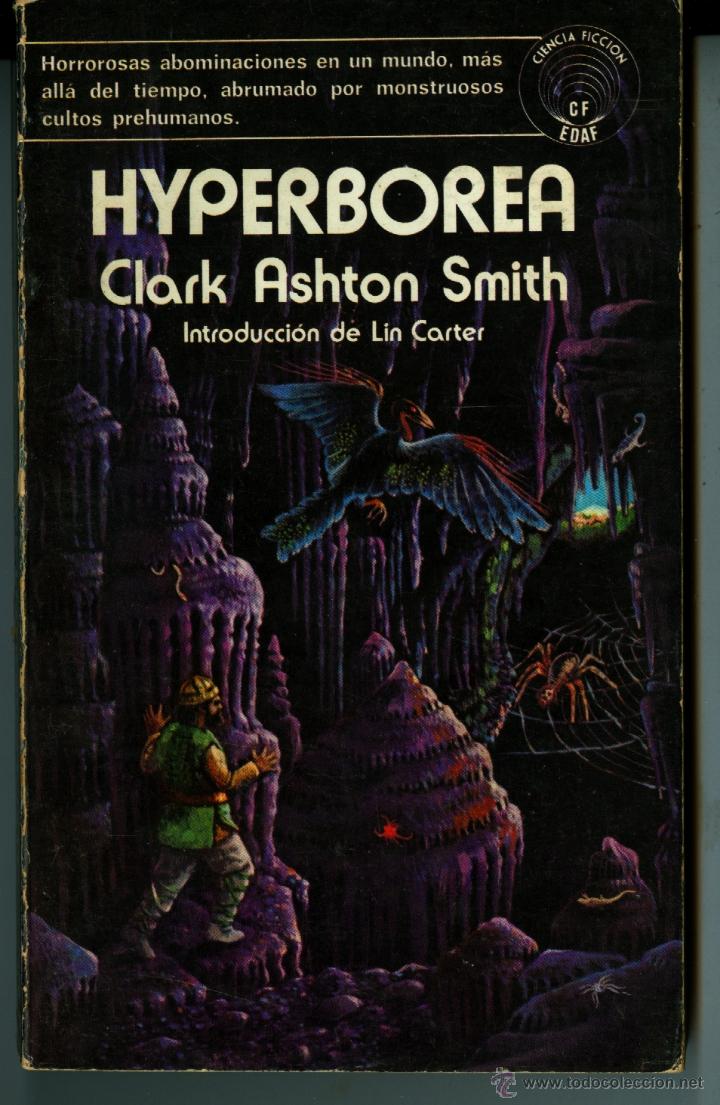
Clark Ashton Smith's Hyperborea cycle.
The old Dark Horse Indiana Jones comics, especially Fate of Atlantis. I was going to mention Raiders, but I already wrote a whole blog post about it a few years ago.
H. Rider Haggard's King Solomon's Mines. The original 'hidden valley' adventure site!
Myth: The Fallen Lords, by Bungie. Dark fantasy wargame that rips off the Black Company extensively.
Daggerfall, the best Elder Scrolls game. Crude, buggy, dark, mysterious, with a charm all its own.
Jason and the Argonauts film (1963). Man those outfits were boss.
Journey to the Center of the Earth, by Jules Verne.
Also: the Wilderlands, everyone's gaming blogs, the SRD, and a giant stack of reference works!
I can't really believe it myself, but Lovecraft doesn't actually get a mention. Land's End is much more pulpy and action-packed, it doesn't really have any sense of horror. There are some gross Lovecraftian monsters but the Chthulhu mythos doesn't even really make sense in the setting, except for a few veiled references.
Well, I'm working night shift pulling cable through government offices for a few months. So it's back to Nocturnal Supremacy, Livin' After Midnight, Dead By Dawn type shit in the realm of Terrible Sorcery. For my 100th post, let's take the piss out of some other people's opinions. Everyone is talking about character death again, I guess. Is this a sign of decadence in a movement: folks arguing about things they claim to/should already know the answer to?
Hey man. Play the game you want to play. "If your players are having fun," you know the hallmark card advice. But without the real chance of PC death, mutilation, loss of equipment, level drain, etc. aren't you just walking on a really slow treadmill? Wouldn't it be just as rewarding to re-watch Lord of the Rings?
I haven't lost a character since my younger days (although I have come close more than once) because I'm mostly a DM. But I really do not understand folks who say the world isn't immersive if characters die. I'm not a method actor! I'll sit at the table the whole session whether it's my turn or not. My character might be alive, dead, petrified or falling down a bottomless pit, I'm experiencing the game world all the same. If I'm interested in what's happening, I'm focused whether my character makes it through or not. If your players don't care about your game, preserving their characters won't save anything.
I also don't understand how it Disrupts The Story. I just assumed that at this point, everyone on my reading list knew what the fuck a sandbox was. If you need a particular character to survive for the story to work... aren't you just 'playing' a soap opera?
Although there is an "anti-death" point to be made about the quality of a character's dying. Sometimes you're just going to get gutted by a 1hp goblin and that's life, but I fear a lack of imagination or originality in many games sucks the juice out of what could be a memorable event at the table. When you tell the story of Sir Dave, will it be "fell in battle with orcs" or "driven mad by the dreaded hypno-ghouls of K'n-Yan"? Play the game you wanna play, of course. But how many combats have you played in that would've made a really memorable character death?
Gary said characters should have a 70% chance of survival and feel like they have 30%. For my part, I have never had more exciting game sessions than when I was CONVINCED we were all fucking toast. Sure, a tight & well-executed plan that comes off smoothly has a charm of its own, but nothing remotely like pulling victory from the jaws of defeat, surviving against impossible odds. Like playing DOOM without the cheat codes, you cannot get that feeling without the possibility of failure, and in a game about fantasy adventurers that's going to include character death.
If you haven't ever felt this sensation, you owe it to yourself to try playing this way. The sense that a bad tactical decision, lack of attention or even ill-luck could end your character forever is a completely different game.
It cannot be faked.
Fuck man, why does anyone play this game? Do you want to have an experience, or just bounce some dice back & forth and add up the numbers on your sheet? Would you rather get laid or just masturbate? One has some non-zero chance of going wrong.
In the dying days of the legendary Google+ I jumped in on this project spearheaded by Eric Nieudan. I finally got my own copy, and it's just awesome. 40+ monsters created by 16 different contributors, including one very cool monster written by THIS GUY! This is the first time I've ever had anything published in print and I feel great, even though my parents will never understand.
There will be no "review" - the PDF is free on drivethru and the print version is only six bucks. So go download it, give it a read and buy it in print if you like it. Eric gets some money from each copy for all his hard work!
I am a big fan of reusing and reskinning monster stats. I mean in classic editions it doesn't matter much either way - you can create a "brand new" stat block that's only barely mechanically different, or just reuse an existing one. Your players will barely feel the difference, probably.
In Pathfinder which my roommates like to play, it's a necessity. I would rather drive my car into the sun than sit down and tinker with all those fiddly rules when I could be using my imagination, so I need to either a) buy more monster books, b) develop the "pathfinder lite stat block (TM)," or c) adapt the monsters I already have to the creatures I make up!
In that spirit, and because I've been thinking about it for a while anyway, let's draw up a little list. This is, I think, all the OGL monsters that have stats in every numerical edition (0-5th). Surely enough that you'd never have to create new stats whole cloth again, yeah?
*****
0-5 UNIVERSAL MONSTER RESKIN LIST
I started with the LBBs, then checked against Labyrinth Lord, AD&D, Pathfinder and 5th edition (anything in AD&D should realistically be in every other edition, but a few things didn't make the OGL cut and 5th was oddly missing a few as well).
*Only technically. OD&D doesn't give you stats, just a suggestion for the animals' HD range based on size. Those LBBs were damnably vague on a few points, that's for sure. Terribly, there are no actual stats for bears in OD&D.
Still, we end up with a really tight list of monsters of varying sizes, shapes and attack methods. This is almost a Platonic D&D Bestiary. Let's break em down by category:
Honestly this is still too many monsters to memorize stats for.
You could pick only one humanoid of each size eg: kobolds, humans, trolls, giants. That's a cool set right there. Memorize those stats for the system of your choice, and then spend the rest of your day working on the cultural finer points for the macaque-men in your new module, secure in the knowledge that whoever may play it has the stats in their monster book at home.
All the non-horse monsters with four legs: basilisk, chimera, dragon, gorgon, griffon, hydra, manticore. That's a great selection for any large beast - take the manticore's stats and swap out the tail spikes for a lightning bolt, there's your behir. See how easy it is?
The list of slimes is a bit lacking for my tastes, if only because these three are all highly dangerous. It's still easy enough to say "Stats as a 2HD black pudding."
If we remove OD&D and only focus on 1st edition and up, the list gets much longer (that's a post for another day though!). Next time you're writing a module, you can reference the stats for any of these creatures and rest assured that everybody will have them lying around. It doesn't matter which version of the game you play, you're ready to go.
*****
Spin this while you're writing up that lost temple of the Ancient Ones that you've been putting off:
***** Rules For Summoning with Absturated Tomes
Introduction here.
The one and only Timo Ketola
Skim through all those links yet? Good. Here are my adapted summoning rules, more or less based on all the stuff above and adapted for my home game. Let's check it out:
Faded Ink, Missing Text - There is a chance the tome has become worn through long years of inactivity, its bloody inks becoming difficult to read or vanishing entirely. Roll percentile dice against the "% faded" number for each ritual in the tome. Any results above that chance are fine - no problems.
A result under this chance indicates enough missing text to cause a problem for that particular ritual. Note down the percentile die result: this is now the target number to beat (see below). Then roll on this disaster table to determine what goes wrong when the conjurer attempts the corrupted ritual.
Anyone reading through the book gets a DC 20 spellcraft check to notice something is amiss (assuming the book doesn't come out and TELL you - not all these tomes are talkative).
Recovering Lost Text - The book needs blood, for it is alive - in a way - and can re-write its contents through absorbing vital fluids. Every HD of sentient being (INT > 3) sacrificed to the book will reduce the "% faded" by 5%. These improvements to a tome are permanent (in the span of most adventurers' lifetimes, anyway). Once the "% faded" chance is below your target number (noted previously), the ritual is totally safe to use.
Sacrifices that do not make it to the target number are still useful. Each sacrifice allows a re-roll on the disaster table with a -1 modifier per HD, although results will never go below a 1. Kind DMs might elect to keep an old result if the new one is worse, but this is your call. Or you could just add the modifiers to your previously rolled result.
Red Herrings - Millennia-old sorcerers preserved in book form do sometimes fuck with you. Occasionally extra steps in the ritual or additional components will be listed that aren't actually necessary. These will never lead to a disaster, but cost more money and time and generally make life more difficult for PCs.
Extra Clues - If the conjurer sacrifices enough to bring the '% faded' chance to 0, some useful detail will appear - perhaps an extra magical component, an extra verse of the incantation. It will grant the conjurer a bonus to his skill check when conducting the ritual itself. [These are specific to each ritual and detailed in their individual entries]
Summoning - Once the conjurer has the necessary components, he performs the ritual. Assuming no disaster occurs as above, he must make a skill roll. The DC varies, each entry will have its own details. The text of the tome itself includes information on its difficulty and how likely the conjurer is to succeed. [You can tell the player what target numbers he needs to roll]
The outcome will be one of three things:
Success: The player made the roll.The ritual works. Great job! Now the conjurer can summon the entities involved anytime, with the relevant spell.
Partial Success: Failing the roll by a margin of 5 or less. The ritual worked, but the conjurer's control is not total. Something will go wrong. Maybe not right now, but eventually.
Failure: Failing the roll by 6 or more (or rolling a natural 1). You're screwed!
*****
The first summoning tome in my game world is called Tanith Loraxalin. More information can be found in part one of this series. This is the first binding ritual detailed within:
Gentle dwellers of damp underworld caves, these humanoids are short and reptilian with translucent bluish bodies. Also called "Anemone Men" because instead of heads, a cup of glowing fronds opens up from their necks. These can stretch out a great distance, and the Men of Peace use them to sense vibrations nearby, allowing them to "see." They aren't malevolent but every part of their bodies is extremely poisonous.
The ritual itself is one of the simplest as these things go. It must be conducted in total darkness, mimicking the nighted caverns where the Men of Peace sleep. The slightest glow from moon, star or torch will prevent their appearance. In this darkness the conjurer pours out a pool of shallow water, covering at least a 20'x20' area. Placing several hunks of raw meat on the ground, he intones the words, tempting the Men from their sleep to come and feed. A soft blue glow will emanate from the water, one rarely seen above ground. In this light alone the Men of Peace will come, and if his offering is accepted they will remember it even in their deep dreams and come at his summons in the future.
Mechanics: The minimum level for performing this ritual is 2nd. The player makes a DC 16 check with a bonus equal to: character level + spellcasting stat modifier (INT, WIS or CHA depending on class).
Success: The Men of Peace will appear and feast on the offering. Later, they'll recognize the conjurer in their dreams. He can summon 1d4 by casting Monster Summoning I, and none will ever attack him. Unlike other summoned creatures the Men will remain indefinitely until destroyed. Mostly they just sleep, and like to stay in one area instead of following the caster around. As long as they remain summoned the conjurer cannot regain the spell slot used to summon them. It is bound up with their presence. When they are all destroyed or banished he may memorize a new spell normally.
In addition, summoning the Men of Peace does not give the caster any special power to 'banish' or dismiss them. The only way for them to leave is to destroy them.
Anemone Men: AL Neutral, Init +1, Per +8, Reach 10', Move 20'
2 HD, Atk touch +1 (poison sting), Fort +6, Ref +1, Will +3
AC 10, BAB +1, CMB +1, CMD 12, Morale 9 Poison: Fort DC 14 (roll twice) - Pass twice, excruciating pain (1d6 damage & a morale check). Fail once, the blue sleep (dream-filled coma for 1d6 hours). Fail both, agonizing death.
Partial Success: The Men are bound successfully, but the conjurer's likeness is forgotten in their deep blue dreams. When they are first summoned everything is fine. If the conjurer leaves their presence for at least a day, the Men will not recognize him in the future - treating him and his friends like any other trespasser in their territory. This process repeats anytime the Men are summoned.
Failure: 1d4 Men of Peace arrive during the ritual, confused and half-awake. Not sure what is real and what a dream, they attack the closest thing that moves, attempting to sting it, remove its eyeballs and eat the rest. After a given Man has poisoned one victim and eaten a little, it wakes up somewhat and can make a reaction roll on this table. Red Herring: None now.
Extra Clue: With this ritual completely restored, Tanith remembers the use of Mandrake Root. Growing in darkness and moisture in the shape of a human, this plant's magic resonates sympathetically with the Men of Peace. Obtaining a whole root and offering it along with the meat will add +2 to the conjurer's skill roll.
*****
Exampleof Play
Guzboch the goblin cleric of Tsathoggua wants to bind the Men of Peace - there is a standard 20% chance that Tanith's text for this ritual is faded or incomplete, but if he's lucky he can still pull it off. The DM secretly rolls a 3%, so missing text has caused a problem. Rolling on the original d20 mishap table, the result is a 16 - that's Not What I Expected! When Guzboch performs the ritual, the way is opened for an Abhorrer. Absalom Glop, the Excruciator, steps through the portal to make everyone's life miserable. After some soul-searching Guzboch sacrifices an underling to Tanith, reducing the chance of corruption from 20% to 15%. This is still well above the 3% roll, and Guzboch is going to need plenty more victims. However, the DM re-rolls on the disaster table. Too bad! A 19 is rolled, with a -1 modifier giving an 18 - You Will Never Be The Same! The goblin cleric has begun his slow descent into occult madness.
Sacrificing a few more goblins, Guzboch brings the % faded to 0. Tanith also recalls that the ritual uses mandrake root, which grows in the dark near standing water. If Guzboch can find some, he will make his next summoning check with a +2 modifier. After a thorough search by his underlings, Guzboch has the mandrake root. He makes his DC 16 summoning roll with a +9 bonus: +4 for being 4th level by this point, +3 for WIS (this is the statistic he uses to cast spells - Wizards can't have all the fun), +2 for using the mandrake root. He rolls a modified 18. Finally, a success! The Men of Peace come to feed, and later he summons them to guard his treasure vault.
*****
[In Land's End there really isn't anywhere the players can 'go research things,' unless they hand the question off to Vantadel, an expensive sage. I needed a different way for characters to solve the problems posed by corrupted texts and ritual disasters, and the absturated tomes of Incunabuli seemed a perfect fit! Be careful to avoid DM dick moves though, since the tomes can communicate with the PCs but may give them false information that could get them killed...]
Next up, binding rituals for the rest of Tanith Loraxalin, and maybe ideas for some other terrible tomes scattered around the campaign world. I can't tell you how excited I am to have my home players deal with the presence of this terrible tome one way or another!
Play this on your next dimly-lit dungeon crawling marathon: